
Traditional Wireless Connectivity vs Wi-Fi HaLow: Which Network Will Power Future Retail?
2025/12/11
Retailers today face rising operational pressures — expanding product assortments, frequent price updates from brands, cold-chain compliance requirements, increased labor costs, and consumer expectations for real-time accuracy. To meet these demands, store operators are investing heavily in automation from electronic shelf labels (ESLs) to smart carts, sensors, and real-time inventory systems. Connecting this expanding array of devices requires a wireless infrastructure that is secure, scalable, and interference-resilient.
For many years, BLE, Zigbee, LoRa, and standard Wi-Fi have been the primary wireless options for these deployments. Each brought advantages in different scenarios—BLE and Zigbee for low-power mesh networks, LoRa for long-distance telemetry, and traditional Wi-Fi for high data throughput. But as retail stores push toward dense IoT ecosystems and real-time pricing automation, these traditional technologies are increasingly unable to keep pace.
Wi-Fi HaLow (IEEE 802.11ah) has emerged as a technology designed specifically for this next stage of retail modernization. With its sub-1GHz long-range capability, strong wall penetration, IP-native architecture, and support for large-scale device density, Wi-Fi HaLow is redefining the wireless foundation required for smart retail infrastructure.
In this article, we’ll compare traditional connectivity technologies and Wi-Fi HaLow, explain why HaLow is emerging as a preferred choice for next-generation retail networks, and demonstrate how Vantron’s Wi-Fi HaLow solutions are enabling large-scale ESL and sensor deployments.
Wireless Connectivity in Retail: Strengths and Limitations
Below is a comparison of commonly used wireless protocols:
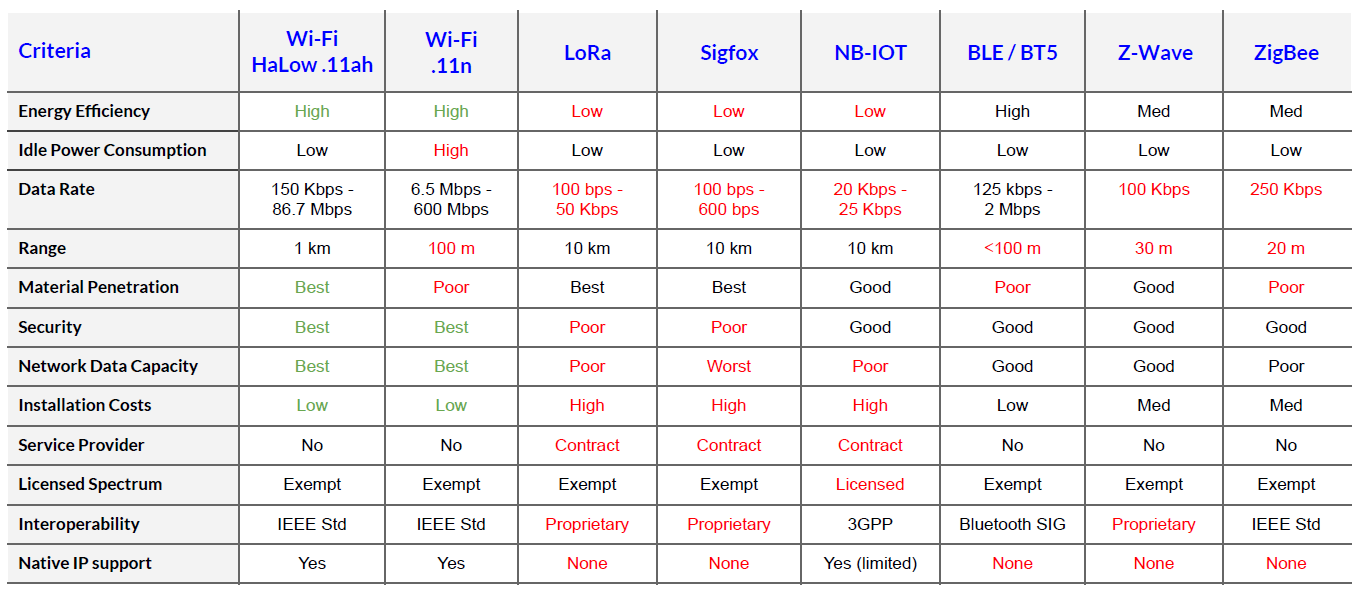
Key Takeaways:
- BLE & Zigbee offer low power but short range and require mesh networks that become difficult to maintain at scale.
- LoRa & Sigfox support long-distance communication but lack the throughput required for responsive ESL updates or multi-sensor applications.
- Traditional Wi-Fi provides high throughput but consumes more power and cannot economically support thousands of devices.
- Wi-Fi HaLow uniquely combines long range, deep penetration, high device density, and IP-native connectivity—making it the only wireless technology capable of supporting large-scale modern retail deployments under a single access point.
How Wi-Fi HaLow Supports the Evolution of Retail
Wi-Fi HaLow (IEEE 802.11ah) represents a significant shift because it is purpose-built for large-scale IoT while maintaining native IP support. Operating in sub-1GHz frequencies, HaLow offers deep penetration through walls, refrigeration units, and product-dense aisles—areas where 2.4GHz and 5GHz systems typically struggle. Its long-range capability allows retailers to cover an entire supermarket with only a few access points, simplifying the architecture and reducing installation and maintenance overhead. Unlike mesh-based networks, HaLow enables a stable star topology with thousands of devices connecting directly to a single AP, eliminating multi-hop delays and drastically improving network reliability. Low-power modes and narrow channel operation make it suitable for battery-powered ESLs, while its IP compatibility ensures smooth integration into existing network infrastructure and cloud management systems.
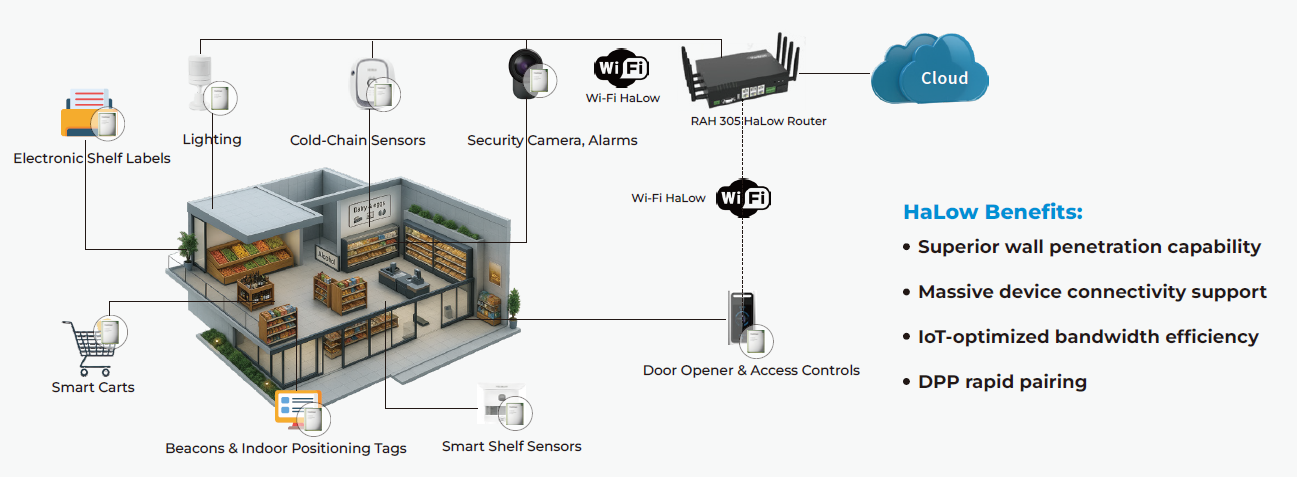
As retailers scale their deployments, HaLow’s advantages become increasingly pronounced. ESL networks that once required dozens of repeaters can now operate with just a handful of HaLow access points. Mass updates—such as promotion-wide price changes—can be pushed quickly and consistently, without the congestion issues seen in mesh networks. Sensors monitoring cold-chain refrigeration, energy consumption, or shelf availability benefit from more stable connectivity and lower latency. Even maintenance efficiency improves: technicians no longer need to diagnose mesh routing problems or replace batteries prematurely due to unpredictable consumption patterns. For operators, this translates directly into reduced operational costs and higher system reliability—two core metrics of successful retail automation.
Vantron: Empowering the Next Generation of Connected Retail
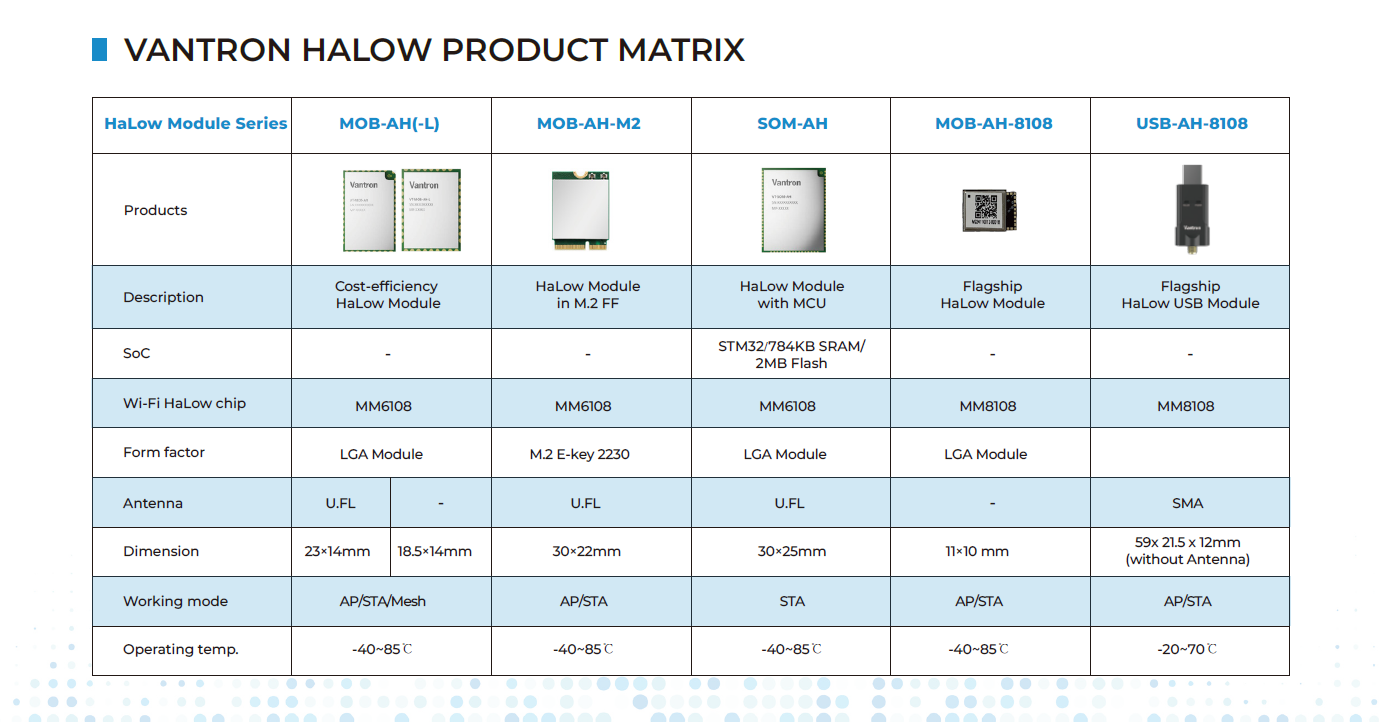
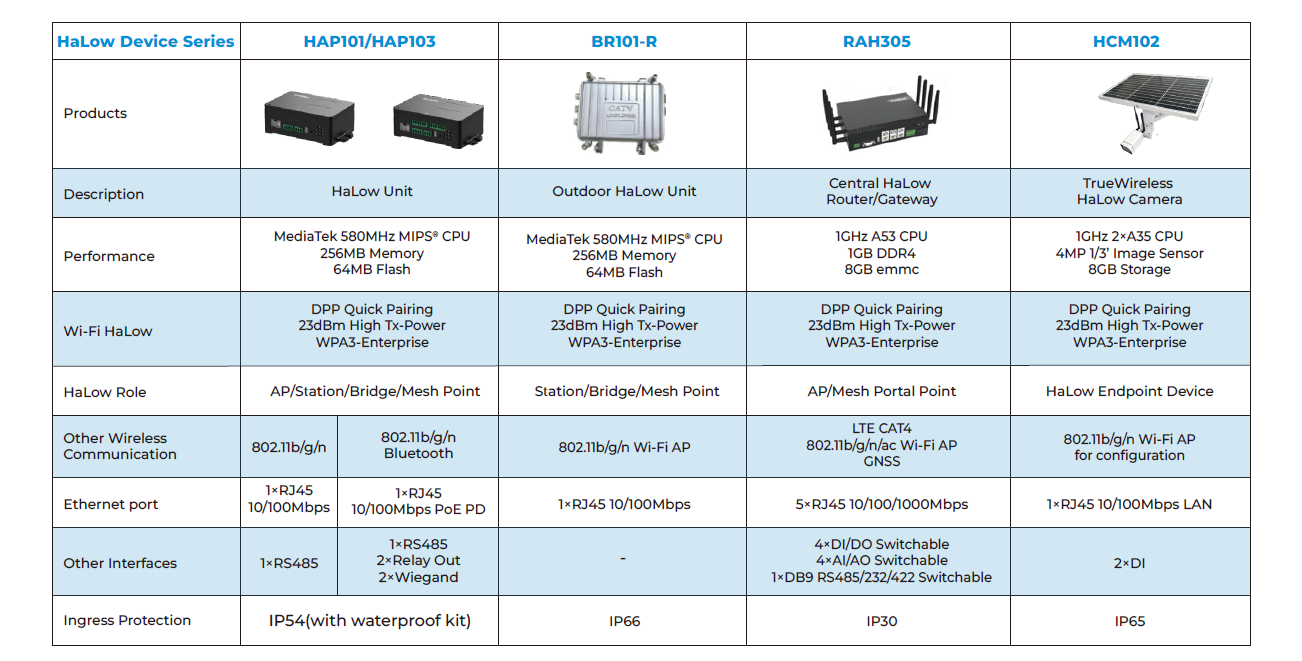
Vantron accelerates this transition with a comprehensive portfolio of Wi-Fi HaLow solutions developed in partnership with Morse Micro. Built on the MM6108 and MM8108 chipsets, Vantron’s HaLow modules deliver high sensitivity, long-range performance, and ultra-low power consumption optimized for retail IoT devices. Beyond modules, Vantron provides complete HaLow devices—from access points and gateways to cameras—ensuring that retailers and IoT developers can adopt HaLow with minimal engineering overhead. It supports remote management and OTA updates through the Vantron BlueSphere MDM platform, making it an ideal wireless solution to inventory management, logistics tracking, digital signage, building automation, or next-generation ESL platforms.
Conclusion
As the retail sector advances toward real-time operations and large-scale digitalization, connectivity becomes more than a technical choice—it becomes a strategic enabler of efficiency, automation, and customer experience. Wi-Fi HaLow, with its superior range, strong penetration, device capacity, and IP-native architecture, aligns directly with the future trajectory of retail innovation. For retailers building the next generation of automated, data-driven, and responsive store environments, Wi-Fi HaLow is emerging not merely as an alternative—but as the new standard.